Scripture, ritual, abduction reports, CE-5 fields, Gateway tapes, and Pentagon hallway theology all generate contact with a non-human mind. The question “is God them?” asks whether Yahweh, angels, demons, Watchers, and UAP occupants share a referent — or whether culture just keeps restocking the same slot. Cosmolink labels models. Awe is allowed. A forced finale is not.

Six working models — keep them labeled
| ID | Name | Core claim | Watch for |
|---|---|---|---|
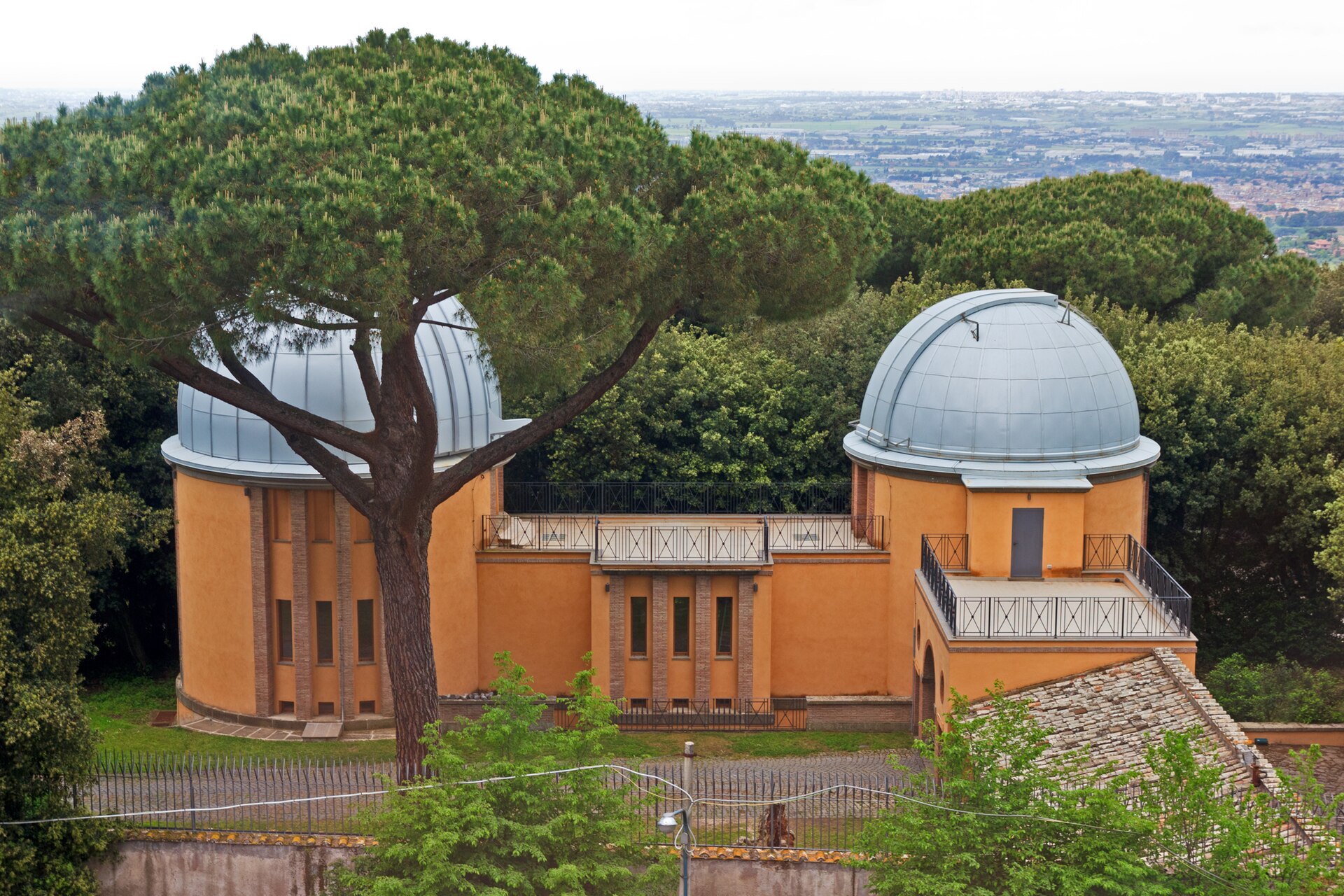
| H1 | Classical theism | God as ultimate; UAP mostly prosaic, psychological, or unrelated | Vatican Observatory: ET would not kill God |
| H2 | Ancient astronaut | Gods were technologists; modern UAP continue the line | Sitchin grammar vs actual cuneiform — Anunnaki desk |
| H3 | Control system / interdimensional | The phenomenon is a teacher, trickster, or regulator of human culture | Vallée, Keel — not a starship census |
| H4 | Psychosocial | Brains and media generate beings; costumes update | Jung’s flying saucers as modern myth |
| H5 | Mixed unknown | Several causes; residual unknown without romance | AARO-era “some unresolved” without ontology |
| H6 | Adversarial / preternatural | Deceptive NHI; older demonology remixed as UFOs | Elizondo’s “religious opposition,” Duke, some Catholic military |
Catholic theology already had a third drawer: natural / supernatural / preternatural. Aquinas used the last for events that are not ordinary physics and also not a miracle from God. Diana Walsh Pasulka has been putting UAP reports in that drawer on Rogan (#2533) and in The Others (2026). She is explicit she is not saying “UFOs are demons.” She is saying the pattern match with historical preternatural encounters is strong enough to study.
Pasulka — when God exited, aliens beamed in
D.W. Pasulka (UNC Wilmington, practicing Catholic) wrote American Cosmic (Oxford, 2019) as an ethnography of UFO belief as an emergent religion: communion with a higher power, interconnectedness, a simplifying story for a chaotic world. Nathaniel Rich in the New York Review boiled the thesis to: “When God exited, aliens beamed in.” Pasulka’s own line is less snide:
“Belief in UFOs is really one of the best things that’s happened to religion in a long time. It’s a blow to the secular, materialist worldview.” Diana Walsh Pasulka, AP News, June 2026
“A lot of people think that the recognition that there are non-human intelligences would change religion, eradicate religion or fundamentally discredit it, but I don’t think so at all. Within the major religions there’s wisdom there with respect to how to deal with non-human intelligence.” Pasulka, OSV News / documentary interview
She later wrote Encounters (2024) and The Others: UFOs, AI, and the Secret Forces Guiding Human Destiny (2026). The later books drop some of the ethnographer’s distance. She has said the research made religion more visceral, that some of what she learned frightens her, and that AI is being used as a model for contact with NHI — not necessarily that ChatGPT is the alien. She cites Stanford’s Garry Nolan, Skinwalker’s hitchhiker effect, and anonymous “Tyler” types inside programs. Treat the named books as her argument. Treat unnamed insiders as unnamed.
On government Catholics: she told El País that many people inside U.S. UAP work are devout, and they split the sky — some events they would file under angels and demons, some as an unknown civilization they treat as a threat because that is what militaries do with unknown airspace.
Vallée and Keel — not from Zeta Reticuli by default
Jacques Vallée (ARPANET, Mars maps, the French scientist in Close Encounters) spent a career arguing that the emotions UFOs provoke are “religious in nature,” and the inverse: religion has always been extraterrestrial in nature. Christians say angels and demons; Buddhists, devas; Lakota, star people. Same slot, different wardrobe. Passport to Magonia put fairies and UFOs on one shelf. Messengers of Deception said the messengers may be lying. He is not a nuts-and-bolts ET salesman. He is the control-system man.
John Keel’s “superspectrum”: an invisible layer that sends UFOs, Virgin Marys, ghosts, and angels, which Keel treated as uniformly bad even when they look good. Pasulka cites both. Rogan pushes back: demons steal souls; UFO occupants often look indifferent. That fight is the desk.
Whitley Strieber and Jeffrey Kripal (The Super Natural) fold visitors into death, afterlife, and the soul as a UFO. Joshua Cutchin’s Ecology of Souls reads many entities as psychopomps — soul-guides — not engineers from another star. That is the thanatological hypothesis: some of this is about dying, not docking.
The Pentagon’s religious problem
Lue Elizondo, in Imminent and interviews, says part of the internal opposition to studying UAP was theological: senior people who thought the phenomenon was real and demonic, a threat to their belief system. Elizondo says he disagrees. He also says he does not take it personally. That is one man’s memoir of hallway politics, not a DoD white paper titled “Demons.”
Apollo astronaut Charlie Duke has said UAPs are real, demonic, and meant “to draw [people] away from the real God,” because “nothing human can make a 90-degree turn at 3,000 miles an hour.” J.D. Vance, Catholic, put “demons” into the Rogan-era bloodstream; Pasulka supplied the Aquinas drawer as context, not as a vote.
Skinwalker’s hitchhiker effect — oddness following people home — is the empirical-sounding stick this camp waves. It is still testimony plus a TV ranch. See the ranch desk.
Vatican: baptize the squid, deny the ET archive
Brother Guy Consolmagno, Jesuit planetary scientist, former director of the Vatican Observatory, SETI Institute advisor, titled a book Would You Baptize an Extraterrestrial? Answer: yes, if it asked. “Any entity — no matter how many tentacles it has — has a soul.” That is classical theism making room, not a disclosure leak.
Pasulka has worked in Vatican and observatory archives (Joseph of Copertino, orbs in nuns’ cells, flying houses). She argues historical “miracles” and modern UAP may be the same class of event under different labels. The Apostolic Archive’s line, via CNS/USCCB (2024): there is no document in the archives that regards extraterrestrial life, and scholars hunting aliens there should be dissuaded. Both sentences can sit on the desk. One is ethnography of miracles. The other is the prefect saying you will not find Roswell in the basement.
Sky events that already had a church
Fátima, 13 October 1917. Tens of thousands. The sun “danced.” The hero photograph is the crowd looking up — not a saucer still. Vallée and later writers filed it with UFOs. The Church filed it with Mary. The photograph does not pick.
Ezekiel’s wheel (Hebrew Bible) is the ancient-astronaut favorite: wheels within wheels, eyes, a throne. It is also a throne-chariot vision in a priestly exile text. Read it as literature before you read it as a flight manual.
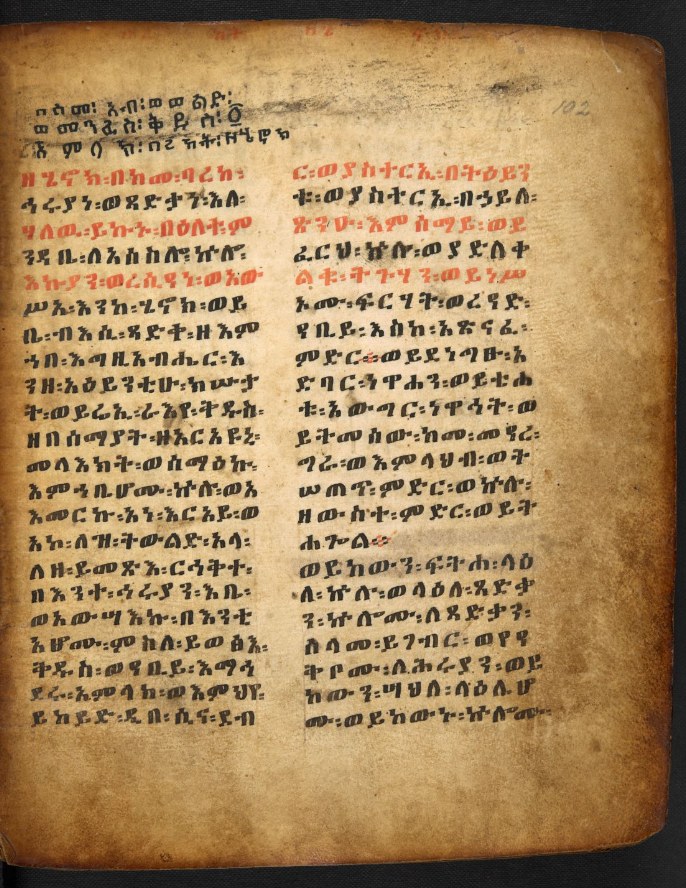
1 Enoch / Watchers: angels who descend, teach crafts, mix with humans. Modern contact lore loves this file. The Cosmolink Anunnaki desk is where Sitchin’s grammar gets checked against tablets. Do not flatten Enoch, Anunnaki, and greys into one species.
Gateway, CE-5, abduction as initiation

The CIA’s 1983 assessment of the Monroe Institute Gateway Process treats consciousness as a tunable channel. That is a classified-adjacent paper about hemispheric sync and “out of body” reports, not proof that God is on 7.83 Hz. Full file: Gateway desk.
CE-5 (Greer / CSETI) is human-initiated contact: group meditation, sometimes lights, a cosmology in which consciousness is fundamental and telepathy is the interface. Tanya Luhrmann’s work on evangelicals hearing God is the academic rhyme — inner voice, trained. The Conversation (2026) asks whether CE-5 is a religion. Practitioners say no, they are making contact. Cosmolink: it functions like one. Safety: no lasers on aircraft. See Greer desk.
Abduction as katabasis: taken out of ordinary space, ordeal, return marked. Hills, Walton, Villas Boas sit on the abduction desk. Halperin and Kripal read that pattern as mythic death-and-return, not only as a medical exam on a ship.
UFO religions, already on the books
Raëlism (France, 1970s): ETs as creators, Elohim as engineers. Nation of Islam: the Mother Plane. Scientology: a whole cosmology of bodies and thetans. These are not “maybe God is a grey.” They are already churches. Pasulka’s point is the broader culture is growing a less-hierarchical, internet-spread analogue without a single prophet — closer, she says, to early Christian community than to a Vatican. That comparison is her scholarly provocation. It is not a baptismal certificate for Tic Tac.

Watch / listen
Map
Fátima, Castel Gandolfo, Skinwalker, CIA/Gateway. Pins are where the stories live, not where God clocked in.
Cosmolink take
Do not collapse the stack. A Jesuit who would baptize an ET is not a Disclosure Project witness. A crowd looking at the sun in 1917 is not Gimbal. Vallée’s trickster is not Sitchin’s Nibiru. Elizondo’s demonic faction is hallway theology until someone publishes the memo. The useful move is Pasulka’s first one: take experiencers seriously as people having experiences, then refuse to let YouTube pick the ontology. If you need a default: H5 mixed unknown, with H1 and H3 and H6 kept in view, and H2 kept on a short leash next to the tablets.